
From Pixels to Fields, Foundation Models are Rewriting Agriculture
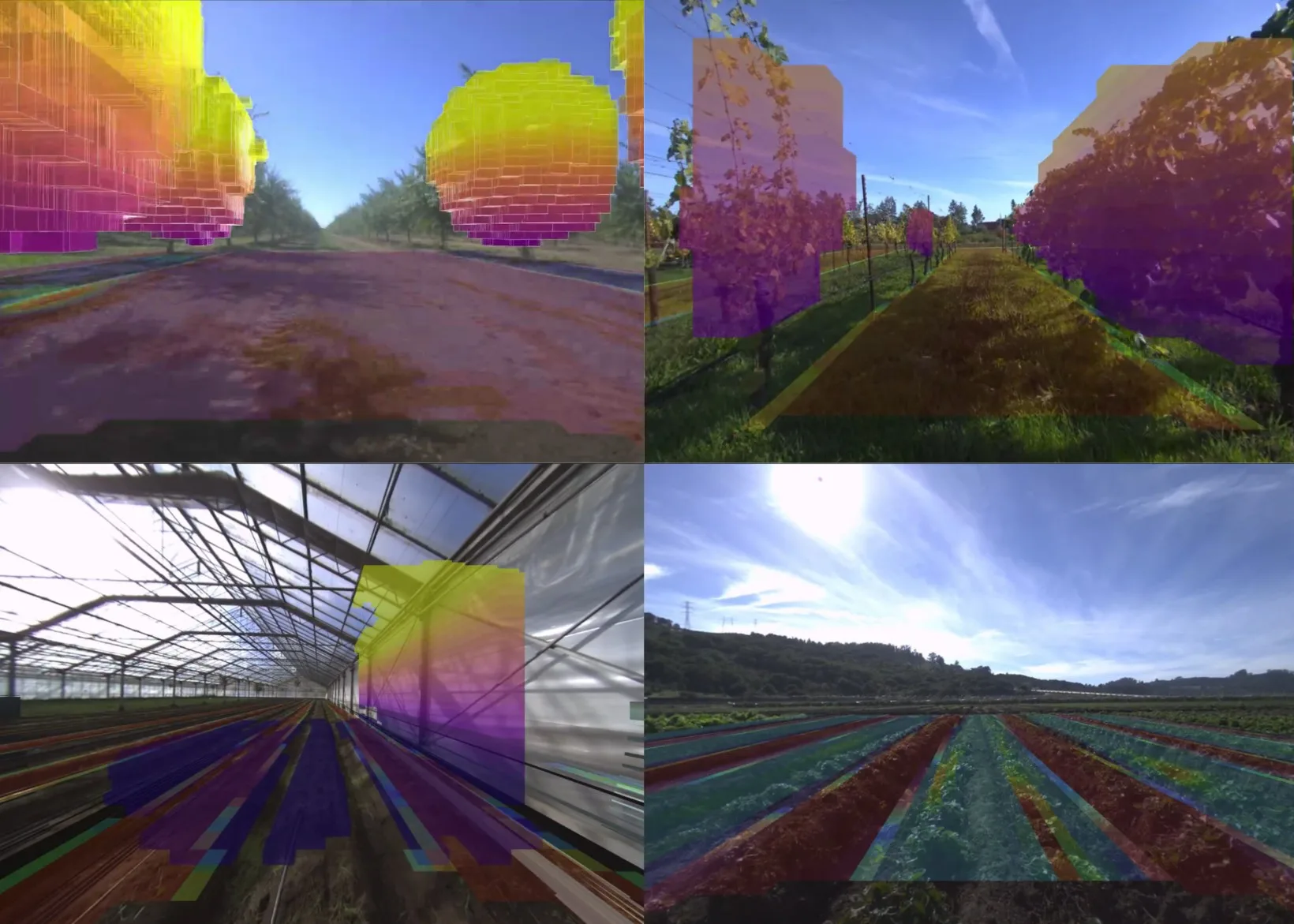
Every technological revolution in agriculture has followed the same pattern. We take a tool built for something else and slowly adapt it to the field. GPS was designed for missiles. Drones were designed for surveillance. Even the sensors that measure soil moisture were born in industrial labs far from any harvest. Across the industry, we spent years adapting computer vision techniques to automate single tasks on specific machines.
Something different is happening now. It’s going to change everything.
The Code Wall No One Talks About
The bottleneck in outdoor autonomy has always been the same, code. Hundreds of thousands of lines of deterministic, brittle, painstakingly hand-written code. Every new crop variety, every new environment , every variation in light or weather meant someone, somewhere, had to write more rules. The machine was only as smart as the last programmer who touched it.
The core limitation wasn’t sensing the environment. It was building systems that could generalize across environments without rewriting the software stack every time conditions changed.
That’s the wall we’ve been living behind for decades in precision agriculture. It’s expensive. It doesn’t scale. It fundamentally caps what autonomous systems can do in the real world.
What Changes with a Foundation Model?
Our foundation model doesn’t operate on rules. It perceives the way a human perceives. Using learned world models and bird’s-eye-view representations, the system predicts occupancy, elevation, object structure, and navigable space directly from monocular camera input. It works across crops. It works across machines. It works in conditions that no programmer explicitly anticipated because the system learns environmental structure instead of relying on handcrafted rules.
This is the shift from deterministic to learned intelligence. And for agriculture, it’s profound. No two fields are the same, no two days are the same and no amount of hand-coded logic was ever going to get us to true scale.
Why This Matters Beyond the Farm
The broader implication is that the cost of deploying autonomy just dropped dramatically. You’re no longer paying a small army of engineers to write bespoke code for every new context. You’re training a model that generalizes across crops, machines, environments, and operating conditions. That’s not an incremental efficiency gain. It’s a category shift in what’s possible and how fast we can get there.
We’re at the beginning of what I’d call the foundation model era of agriculture. The hardware is mature enough. The sensors are good enough. What was missing was a learned intelligence system, or brain, capable of understanding the physical world without relying on explicitly programmed rules. We now have that brain.
The future isn’t being written in lines of code. It’s being learned.
“We go from a 2D camera image to a 3D scaled world in any crop, on any machine, at any time. No code. That is the Bonsai Robotics difference.”

Tyler Niday is the CEO of Bonsai Robotics.
Watch his interview on our YouTube channel.